Locations


While George Lucas isn’t exactly a world beater when it comes to dialogue, one of my favorite quotes comes from one of his movies. Jedi Master Yoda utters these wise words: “Fear is the path to the Dark Side. Fear leads to anger. Anger leads to hate. Hate leads to suffering.” From the mouth of a puppet . . .
While I think these words are surprisingly applicable to many things in our real world today, I think fear is also a major problem in Magic, though perhaps without quite such dramatic consequences. Whenever you have to make a decision about anything, in life or in Magic, there is a fear that you will make the wrong one. In Magic, this is exacerbated by the rabid cult of group-think that seems to have taken hold of the Magic community, especially now that it has become so unified by the power of the Internet.

Unfortunately, the answers accepted as correct in Magic often seem to be determined by referendum these days. If your approach defies conventional wisdom, too often it is vilified. Being unconventional is something that can be applied to Magic in many ways: deck design, drafting, and game play. In all of these areas, being unconventional can reap big rewards if done with skill and some luck.
At Pro Tour: Chicago in 1998, conventional wisdom said that it was a superfast, super-aggressive, tempo-oriented format because of the many cheap, hard-hitting, and hard-to-block shadow creatures in the format. White, blue, black, and red were valued for their evasion, removal, and aggressive cards. Green was somewhat ignored because of its reliance on larger, more expensive creatures and lack of removal for opposing cheap, evasion creatures. I remember doing a pickup Draft with some pros during that time period, and Ben Farkas took a generic 2/2 green creature for 3 mana and passed me a big, green 5-drop because the need for speed was so deeply ingrained in his mind in that format. Yet, this widely accepted wisdom gave me a great advantage—it rewarded my unconventional strategy.
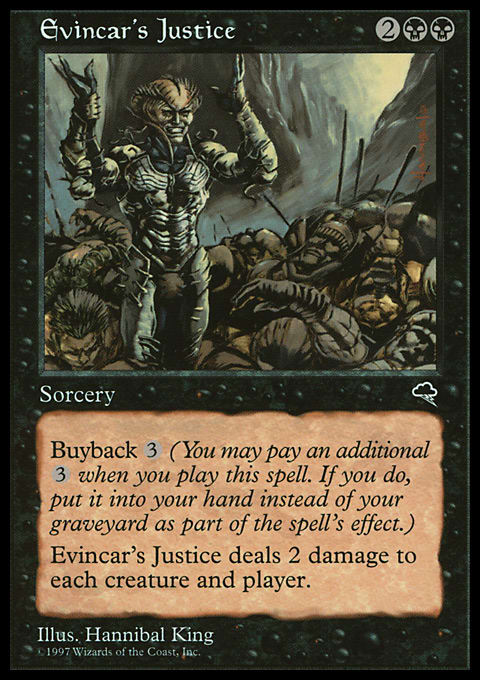
Unfortunately, I fell just short of making the Top 8 in that PT, but my ninth-place finish was still good enough for me to feel great about my unconventional strategy. This is one of the big problems with identifying successful new archetypes: sample size. If I’m the only one playing a rogue Standard deck, and I go 6–3 in a nine-round 5K, my deck will be usually become lost in obscurity. Yet if the event was won by a Delver deck, you can be certain that many Delver players did much worse than 6–3. In that event, you couldn’t simply say that Delver was definitively a better deck than mine just because it won the event—especially since my result will usually have outpaced more than half of the Delver players. Perhaps if ten people had been playing my deck, three would have made the Top 8 and a couple would have done worse than I did. Problems with sample size make the kinds of statistical analysis that Magic experts like to use in their articles fraught with uncertainties.
There are many ways fear can hold you back as a Magic player, and fear of straying from accepted theory encompasses several of them. These are the big Magic phobias:
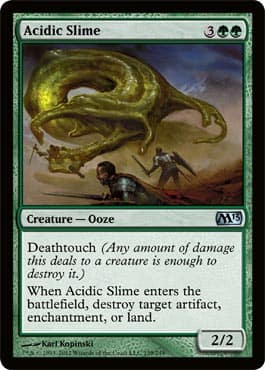
- Roguephobia – Fear of playing an innovative deck. This usually takes one of two forms: being afraid that you’ll do poorly and people will think less of you as a deck designer/chooser or being afraid of doing poorly and regretting not playing your usual deck that you usually do well with.
- Stockphobia – Fear of playing a known stock deck that’s already popular. This is often a result of a concern that either you will lose mirror matches because you’re not a good enough player or wanting the excuse of being able to blame it on your deck if you don’t do well.
- Formatphobia – This usually manifests as either a fear of playing Constructed or a fear of playing Limited. Those who fear Constructed usually either fear that they lack the ability to design/choose good decks or are afraid of being outed as a bad player when card-pool randomness is removed. Those who fear Limited often fear that they lack the ability to design Limited decks, preferring to pilot decks they already know to be good.
- Draftphobia – This is an inability to make innovative choices when drafting for fear of failure and/or ridicule. Once there appears to be anything resembling a consensus about a card or strategy in Draft, it becomes set in stone for a sufferer of draftphobia.
- Combatphobia – This is a paralyzing fear of the red zone and all activities that take place there. In one extreme, the patient is much too cautious when it comes to combat because of a fear of unknown possible consequences that will lead to defeat, or even just a fear of using his or her life total as a resource. In the other common form of combatphobia, the patient is much too aggressive when it comes to combat for fear of being considered a cautious noob.
- Eventphobia – This patient desires the glory of playing in and winning big tournaments but always finds reasons to avoid playing in them or in qualifiers for them. This maintains the illusion in the player’s head that if only he or she had the time or a chance to play in these events, the player would do well—all while the player is fearfully avoiding the potential pain of being wrong and feeling that he or she is not good enough.
The first step toward successful treatment is admitting that you have a problem. Do any of the phobias listed above sound as though they might apply to you? If the answer is “yes,” you need to explore the reasons for your fear. You also need to ask yourself why it is that you play Magic. Is it mainly just to socialize with your Magic-playing friends? Is it to impress people? Are you just trying to fit in? Do you dream of being a Pro Tour champion or perhaps someday joining the Pro Tour Hall of Fame?
Don’t let fear of failure or fear of ridicule stop you from being the best Magic player that you can be. Just remember that each failure is just an opportunity for you to discover one of the many paths that don’t lead to success, thus bringing you closer to eventual success. Even if you don’t become a Pro Tour champion, learning to overcome fear can help you be a stronger person in the rest of your life, and that’s something we all can and should do—whether or not we maintain our passion for Magic.