Locations


The KISS principle can be an excellent default in Magic. While a simplistic one-note deck is rarely the type of deck that wins big events, the formula for success is certainly a far cry from the idea that the more complex a thing is the better. There is a pretty common perception that the harder the deck is to play, the better it is. There is also something of an obsession with having answers for every possible thing an opponent might do. The issue of simplicity versus complexity is an important aspect of both Constructed and Limited.
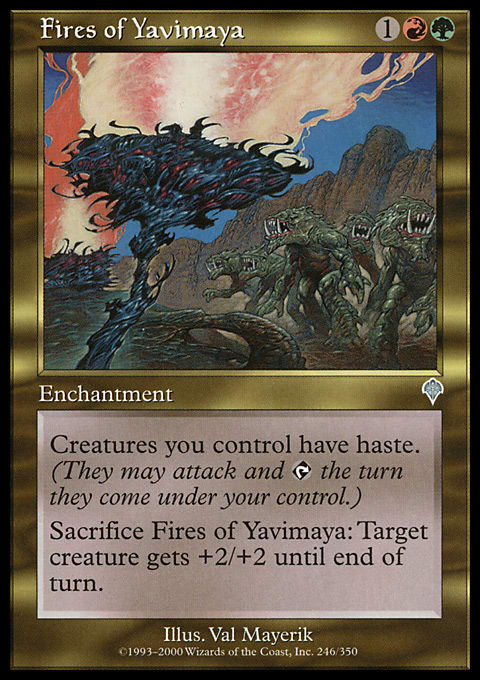
At Pro Tour: Chicago in 2000, I worked with Team Your Move Games to prepare for the event. Each of the principles—Dave Humpherys, Rob Dougherty, and I—came up with a different approach for the format. Dave went with the most popular approach on the team: building a three-color Fires of Yavimaya deck designed to beat the more basic R/G version of Fires that we expected to be popular at the event. Rob, who had less time to prepare because he had been vacationing with family, decided to keep it simple and play basic R/G Fires. I decided to play an unusual, multicolored Merfolk/Mercenary deck designed to beat Fires of Yavimaya.
While I proved ready for Fires, I lost constantly to the second-most-popular deck: Rebels. Dave’s version proved to be okay against other Fires decks, but it was just weaker against everything else, and none of my teammates did well with that deck. Rob, on the other hand, the one player who kept it simple, powered his way to a Top 8 finish. He was playing the known best deck that he also had a lot of experience playing, and he had the default advantage in every matchup. Rogue decks like mine usually fall quickly out of the winners’ brackets, leaving Rob a clear field of mirror matches, Rebels, and decks that just weren’t as good as his. It left me wishing I had joined Rob on vacation instead of spending so much extra time testing.
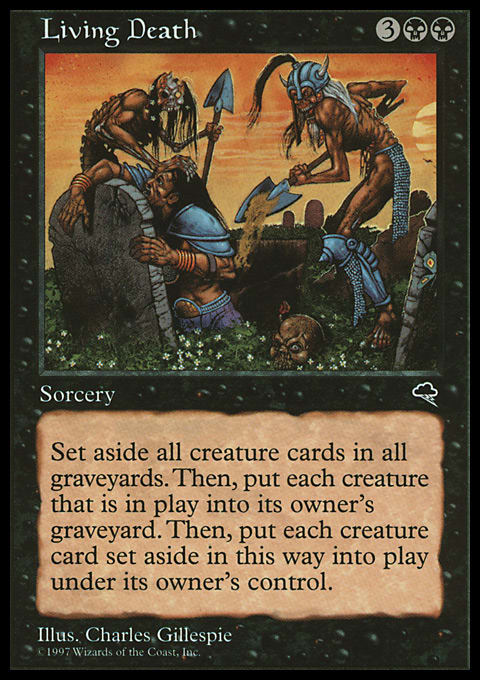
The thing that scared me away from Dave’s version was the need for dual lands. The best dual lands in Tempest caused you damage, which seemed bad against red aggro, and these lands made you vulnerable to Wasteland. Yet to support Dave’s deck, it was impossible to avoid using nonbasic lands. I could have used dual lands in my two-color deck, but I decided it was crucial to make my deck invulnerable to Wasteland, so I only used basic Islands and basic Swamps. As a result, I made sure not to need  for any of my spells and not to need
  until I hit 5 mana.
I also chose the contents of my deck with red decks and Humility decks in mind:
"Tempest Block Living Death"
- Creatures (16)
- 4 Rats of Rath
- 4 Skyshroud Vampire
- 4 Tradewind Rider
- 4 Bottle Gnomes
- Spells (16)
- 4 Intuition
- 4 Power Sink
- 4 Living Death
- 4 Lobotomy


The reason: Red decks were everywhere, and my version just matched up better. The mana was more consistent, less painful, and less vulnerable to Wasteland. Further proof of the benefits of keeping it simple was the fact the winner of the event David Price was playing an even simpler deck: Deadguy Red. Dave happened to be the best of a sea of red aggro players at that event. Adam and I were the only two people playing my Living death deck, and the results certainly suggest that simple decks were the way to go.
My Jund Pod deck is another example of being able to make a deck better by making things simpler. My last version tried to do too many things. It was good, but it definitely benefits from some simplification:
"Dark Pod 2.0"
- Creatures (32)
- 1 Bloodflow Connoisseur
- 1 Bloodthrone Vampire
- 1 Rage Thrower
- 2 Huntmaster of the Fells
- 3 Falkenrath Aristocrat
- 4 Birds of Paradise
- 4 Blood Artist
- 4 Borderland Ranger
- 4 Llanowar Elves
- 4 Strangleroot Geist
- 4 Zealous Conscripts
- Spells (4)
- 4 Birthing Pod
- Lands (24)
- 1 Mountain
- 11 Forest
- 3 Swamp
- 1 Kessig Wolf Run
- 4 Copperline Gorge
- 4 Woodland Cemetery

Sure, it’s possible I will occasionally wish I had an Acidic Slime, Thragtusk, or some other creature in the deck to search for, but that’s why the Magic gods invented sideboards. Like my Naya Pod deck, my sideboard will probably consist of fifteen creatures chosen to be able to upgrade the deck in various matchups. I expect to run this version of the deck at some events at Gen Con, so by the time you’re reading this, I’ll have a better idea of what the sideboard should be, and if I see some interesting results, I’ll probably elaborate in a future column.
Many players could benefit from the KISS principle in Limited, too. Too often, players will fall into the trap of playing too many cards that aren’t lands, creatures, or creature removal. Additionally, players will often pass up opportunities to play tight, consistent, and powerful two-color decks in order to add a third color without realistically making their decks better. Whether it’s Limited, Constructed, or even just a play decision, if you’re unsure what direction to go in, I recommend keeping things simple. While of course it’s not always the right choice, it will be often enough to make it worth the gamble when you’re really unsure.