Locations


As any evolutionary biologist will tell you, in the grand struggle of life, there are losers as well as winners. That lends some irony to the fact that of all the guilds this time around, the very worst of the Intro Pack decks belongs to the Simic. What promise it had! We were fortunate enough to play with evolve during the course of the Great Designer Search 2, when several of the designers asked us to have a go with their mockup Intro Packs. Ethan Fleischer's Tooth & Claw showcased a blast of a mechanic that reminded us of all the things we'd enjoyed about Allies in Zendikar/Worldwake. Surely, this official adaption of the mechanic could do better than Simic Synthesis?

That said, the card costs 4 mana, and you lose any strategy that goes into best utilizing whatever your card ends up being—you must cast it on the spot or waste the opportunity. Sure, you make up a little lost ground with the ability to get a free land out of it, but Unexpected Results really pays off only if you're able to cheat something out with it. Otherwise, wouldn't you most often rather draw the cheaper card to begin with? Only four cards are more expensive here, and it's a waste of a rare slot. Would an Ooze Flux or Biomass Mutation have been too much?
In modifying the deck, we'll be holding to our two Golden Rules of Meddling, which are designed to keep the deck affordable and easy to assemble. First, we won't add any rares or mythics. Second, we can only draw replacement cards from sets already found in the deck: Gatecrash and Magic 2013. Here's what we start with.
"Intro Pack: Simic Synthesis"
- Creatures (21)
- 1 Chronomaton
- 1 Cloudfin Raptor
- 1 Crowned Ceratok
- 1 Elusive Krasis
- 1 Fathom Mage
- 1 Frilled Oculus
- 1 Ivy Lane Denizen
- 1 Leyline Phantom
- 1 Merfolk of the Depths
- 1 Sapphire Drake
- 1 Zameck Guildmage
- 2 Adaptive Snapjaw
- 2 Crocanura
- 2 Drakewing Krasis
- 2 Kraken Hatchling
- 2 Shambleshark
- Spells (13)
- 1 Hindervines
- 1 Tower Defense
- 2 Bioshift
- 1 Sleep
- 1 Unexpected Results
- 1 Urban Evolution
- 2 Encrust
- 2 Forced Adaptation
- 2 Simic Keyrune
- Lands (26)
- 12 Forest
- 13 Island
- 1 Simic Guildgate
After making some preliminary cuts and tweaks to the deck, I noticed that this was a deck that could really go in two different directions. One way would be to employ some muscle, working the curve to ever-bigger creatures that could trigger a stream of +1/+1 counters. Ambitions to clog up the red zone would end in tears for your opponent when you land a Crowned Ceratok or Sapphire Drake, ramping up the damage output and bringing the game to its conclusion. We'll call this one "Strong Simic," a cheesy nod to the alliteration at work amongst the set's preconstructed offerings.
The other deck keeps the same evolutionary core, but rather than going above or over your opponent's defenses, "Sneaky Simic" instead likes to slip through them. This version harnesses the power of blue creatures to avoid detection, taking a straight shot at your opponent's life total turn after turn.
Strong Simic
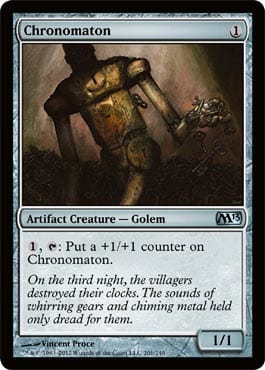
This leads us to the deck's first cut, the Chronomaton. Thought the Chronomaton has some synergy with the other cards that care about +1/+1 counters, it's too slow and cumbersome. Even a first-turn play still demands mana from you each turn if you want to grow it, and it does no growing on its own. We'll also be dispensing with the services of our Frilled Oculus. Though it's nice to have a mana sink for later in the game, and the Oculus has that wonderfully asymmetrical power and toughness that the Simic delight in, it just doesn't do enough.
The Ivy Lane Denizen, like the Chronomaton, is another card that is cute with counters. Although bonus counters are welcome, until you play that next creature, all you've done is pay 4 mana for a 2/3 body. Although this deck will be more midrange than our Boros creation, we still don't want to give away slots so loosely. The same goes with the last two creatures to hit the bread lines, the Leyline Phantom and Merfolk of the Depths. The Phantom seems like a natural fit, since a 5/5 is sure to trigger several evolves on the board. The problem here, again, is speed. A 5-mana 5/5 is a fine deal, but without haste, you’ll at most only be recasting this every other turn. The Merfolk, meanwhile, cost 6 mana. Flash or no, that's just too much for what we're looking to do.

Also gone are the Crocanura and the Elusive Krasis. We'll see the Krasis in an environment better suited for its talents in a bit, but Strong Simic has better options. This is a large swathe of cuts, but on the upside, it gives us plenty of room to rebuild.
We know from playing the deck that the Cloudfin Raptors are deceptively powerful and can get in significant damage rather quickly if you manage to keep evolving it. We'll want the full play set here, and to make sure we're able to consistently kick things off early, we'll also add a pair of Experiment Ones. Lacking evasion, they're not quite as sexy as the Raptors, but the ability to regenerate when needed is nice—especially when they can regrow any lost counters through evolve. Finally, we're going to go with a full set of Kraken Hatchlings as well. This seems counterintuitive, as 0/4s aren't the first things that come to mind when you think of creature-based aggression. Still, the Simic are vulnerable to the early rush, as they need time for their creations to grow. The Hatchling hits on both ends, offering a stout body that can soak up a ton of damage early as well as a useful evolve trigger when drawn at later stages of the game.
Next up are the Shamblesharks. Although you usually won't want to trade them so cheaply, their flash does make them double as ersatz removal if you're under assault from an early creature rush. As a 2/1, you can evolve them early and often, and they can be a useful combat trick in a pinch if you need to evolve another of your beaters in a hurry. They don't do any one thing spectacularly well, but they do manage to do enough of a few things that their position is safe. We'll round out the play set. We'll also be adding another Zameck Guildmage, as both abilities will be relevant here.
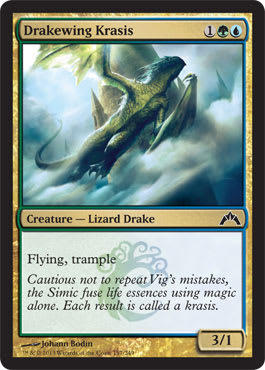
For the top of the curve, we have a few options to make the rest of your creatures even better. The Fathom Mage is stupidly expensive for a 1/1, but the prospect of free cards (as well as her fun factor) ensure she's in the starting lineup. Finally, with so many +1/+1 counters sloshing around, why not make them even more relevant? Although we don't have an Overrun in this environment, giving all of your creatures trample can still be an effective way to close the gap between you and victory. A pair of Crowned Ceratoks promise precisely that, and they have a solid 4 power to boot. But what could be better than stomping over your opponent's defenses? How about flying over top of them altogether? Enter the Sapphire Drake. Playing either of these is a rich reward for all the hard work you've done growing your army.
We'll get to the noncreature supporting suite in a bit, but first, let's change gears and look at our second Simic build.
Sneaky Simic

Instead of the Drakewing, this time around, we'll want the Elusive Krasis. This one gives the deck three things: an increased defensive footprint to buy time against an opponent, a fat toughness to trigger evolve, and an unblockable attacker that can be a real threat after a few deployments. It's a perfect fit here, but we'll also include a pair of Fog Banks to really gum things up. Normally, the problem with making it hard for your opponent to attack is that you run the risk of making it hard for you to counterattack—the opposing army is untapped. With unblockable creatures, that's no longer relevant, so defensive options like this are that much better. By the way, although we can't include them here thanks to our Golden Rules, you might consider swapping the Banks out for Hover Barriers thanks to the natural synergy with evolve.
The last difference in the deck is that we'll be taking out the Crowned Ceratoks and Sapphire Drake and replacing our closing options with a pair of Roaring Primadoxes and two Keymaster Rogues. Both of these Unsummon a creature (the Primadoxes every turn), but that's where the Kraken Hatchlings really pay their way. They're dirt-cheap to recast and give you a new round of potential evolve triggers.
The Supporting Suite
Bioshift is an interesting card because it lets you drain one of your creatures for counters to put on another. Though not without the obvious risks of being blown out by removal, it's useful in that it allows a creature that has reached the end of its evolutionary path to begin accumulating +1/+1 triggers all over again. Since the Strong Simic anticipates more direct creature-to-creature contact, we'll include two copies there. For the Sneaky version, we'll hold it as a miser's copy. Finally, for the Strong version, we have room for a pair of Sleeps. The Strong version of the deck doesn't have all the trickiness of the Sneaky one, so Sleep is another way to put a massed army to good use in case the red zone becomes bogged down.
In the Field
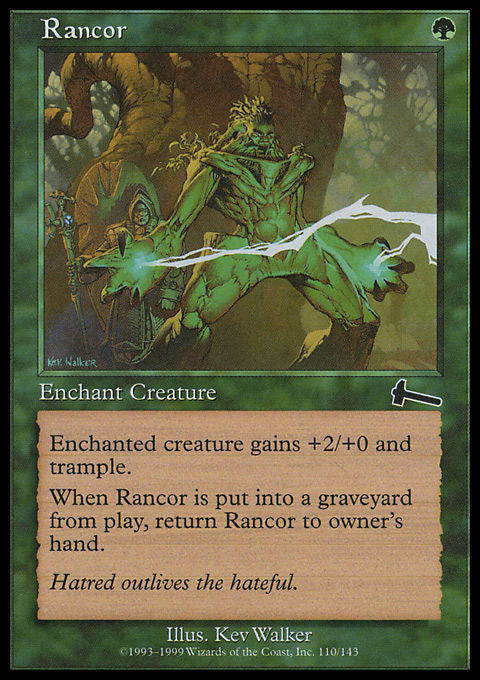
We played about half and half between the two variants. While Strong seemed a touch more consistent, I found Sneaky more fun to play. In both iterations, though, I was able to win more than my share of matches in large part to the deck's air force. That's the consistent spine that anchors both decks in place, a strong aerial presence thanks to the Raptors and Drakes that lets you keep up the stream of damage even as you're evolving your ground troops. Rancor was terrific on an evasive body, and the bolstered defenses bought me enough time to establish my game plan, whereas originally the Simic would just be continually overrun.
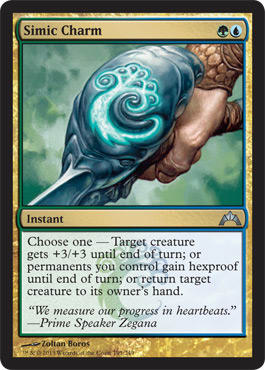
A card to keep an eye on is Bioshift. This always seemed a streaky draw—when it was good, it was great, but I never wanted to see it in my opening hand. It sets up some lovely combo shenanigans with the Fathom Mage, though, and between it and the Simic Charms, there's more than enough here to keep an opponent guessing in the red zone. Here are the decklists for today's experiments.
"Simic Synthesis II: Strong Simic"
- Creatures (24)
- 1 Fathom Mage
- 1 Sapphire Drake
- 2 Crowned Ceratok
- 2 Experiment One
- 2 Zameck Guildmage
- 4 Cloudfin Raptor
- 4 Drakewing Krasis
- 4 Kraken Hatchling
- 4 Shambleshark
- Spells (12)
- 2 Bioshift
- 4 Simic Charm
- 2 Sleep
- 4 Rancor
- Lands (24)
- 10 Forest
- 12 Island
- 2 Simic Guildgate
"Simic Synthesis II: Sneaky Simic"
- Creatures (27)
- 1 Fathom Mage
- 2 Drakewing Krasis
- 2 Elusive Krasis
- 2 Hover Barrier
- 2 Keymaster Rogue
- 2 Roaring Primadox
- 2 Shambleshark
- 2 Zameck Guildmage
- 4 Cloudfin Raptor
- 4 Incursion Specialist
- 4 Kraken Hatchling
- Spells (9)
- 1 Bioshift
- 4 Simic Charm
- 4 Rancor
- Lands (24)
- 14 Island
- 8 Forest
- 2 Simic Guildgate
Jay Kirkman