Locations


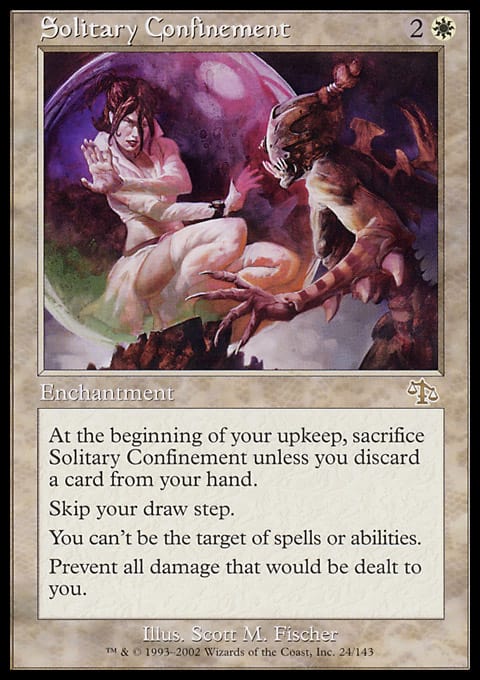
Enchantress is essentially a combo deck that sets up a soft lock on your opponent. Unlike most combo decks in Legacy, this deck doesn’t win on turn two or three. Enchantress spends the first couple of turns setting up the combo by casting Enchantresses, accelerating mana with cards such as Wild Growth, and drawing cards. By turn three or four, you will be able to play Solitary Confinement, a card that basically says, “You cannot lose the game.” You can’t take any damage, and you can’t be targeted by burn, discard, or spells such as Brain Freeze. Then, while your opponent spends his next few turns doing nothing, you spend your turns setting up your win condition.
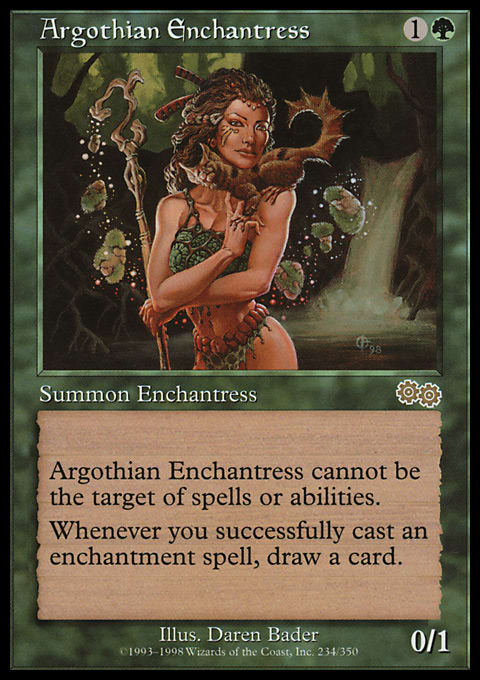
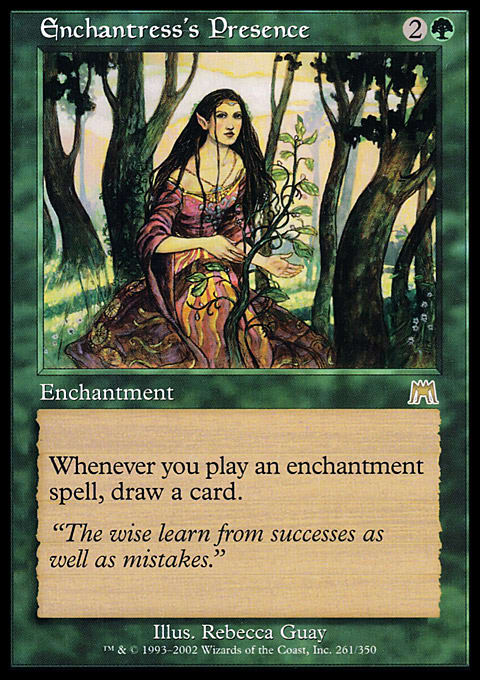
I’ve always liked Enchantress for two reasons. One, Argothian Enchantress can’t be targeted, meaning that she will usually stay in play once she resolves, and two, you draw a card when you cast an enchantment, not when it resolves. Therefore, once you resolve an Enchantress, there is not much your opponent can do to stop you from drawing cards.
Here is the first Enchantress deck I’ve ever played back in the year 2000. It was my first competitive deck, and I played it to a Top 8 finish of my Regionals that year. The format was Standard with Urza’s Saga block and Mercadian Masques block.
"2000 Standard Enchantress"
- Creatures (12)
- 4 Argothian Enchantress
- 4 Birds of Paradise
- 4 Verduran Enchantress
- Spells (27)
- 1 Seal of Cleansing
- 2 Fertile Ground
- 2 Worship
- 3 Seal of Removal
- 3 Trade Routes
- 4 Ancestral Mask
- 4 Exploration
- 4 Rancor
- 4 Wild Growth
- Lands (21)
- 1 Plains
- 4 Island
- 7 Forest
- 2 Adarkar Wastes
- 4 Brushland
- 1 Serra's Sanctum
- 2 Gaea's Cradle
The sideboard included goodies such as Absolute Law, Absolute Grace, more copies of Seal of Cleansing, and Multani's Presence.
Back then, we didn’t have Solitary Confinement. We had to lock our opponents out the old fashioned way: with Worship. Most decks won with creatures and damage anyway, so Worship was usually a game winner. Argothian Enchantress’s shroud pretty much made her invincible anyway, so you always had a creature in play.
Over the years, Enchantress evolved considerably. Invasion block gave the deck Sterling Grove, an essential card that not only can search for any enchantment, but that also gives all of your other enchantments shroud. With two Sterling Groves on the battlefield, your enchantments can’t be touched. Next was Odyssey block, which provided us with Solitary Confinement, a card that could set up a soft lock on your opponent. Finally, Onslaught block was released, which changed the deck entirely.
In Onslaught block, the best Enchantress ever was printed: Enchantress's Presence. Finally, the deck was given an enchantment that provided an Enchantress effect. Having two Enchantresses that were invulnerable to creature removal gave the deck a huge boost, and Verduran Enchantress got the axe. Onslaught block also gave the deck some alternate win conditions: Words of War and Words of Wind. Words of Wind isn’t really a win condition, but it does make it so your opponent will have no permanents in play.
Here is the Extended version of the deck, circa 2002–2003. My friend and playtest partner, JJ Stors, won a Pro Tour Qualifier with the deck to qualify for Pro Tour: Venice in 2003.
"2002–2003 Extended Enchantress"
- Creatures (13)
- 2 Verduran Enchantress
- 3 Auratog
- 4 Argothian Enchantress
- 4 Birds of Paradise
- Spells (26)
- 2 Bind
- 2 Mana Leak
- 1 Seal of Cleansing
- 1 Trade Routes
- 1 Worship
- 2 Ancestral Mask
- 2 Sterling Grove
- 3 Exploration
- 4 Enchantress's Presence
- 4 Rancor
- 4 Wild Growth
- Lands (21)
- 1 Plains
- 5 Forest
- 1 Adarkar Wastes
- 1 Treetop Village
- 2 Brushland
- 4 Windswept Heath
- 4 Yavimaya Coast
- 1 Serra's Sanctum
- 2 Gaea's Cradle
Finally, Conflux was released, and the deck was complete. Sigil of the Empty Throne was printed, allowing the deck to play zero creatures other than the four Argothian Enchantresses. This is very important because it makes so many cards, such as Swords to Plowshares and Lightning Bolt, do practically nothing against this deck. Here is my current Legacy Enchantress list:
"Legacy Enchantress"
- Creatures (5)
- 4 Argothian Enchantress
- 1 Emrakul, the Aeons Torn
- Spells (34)
- 1 Crop Rotation
- 2 Enlightened Tutor
- 1 Replenish
- 1 Humility
- 1 Sigil of the Empty Throne
- 1 Wheel of Sun and Moon
- 1 Words of Wind
- 3 Mirri's Guile
- 3 Solitary Confinement
- 4 Elephant Grass
- 4 Enchantress's Presence
- 4 Sterling Grove
- 4 Utopia Sprawl
- 4 Wild Growth
- Lands (21)
- 1 Plains
- 6 Forest
- 1 Horizon Canopy
- 1 Misty Rainforest
- 1 Tropical Island
- 1 Verdant Catacombs
- 1 Wooded Foothills
- 2 Savannah
- 4 Windswept Heath
- 1 Karakas
- 2 Serra's Sanctum
- Sideboard (15)
- 2 Journey to Nowhere
- 2 Choke
- 1 Replenish
- 1 City of Solitude
- 2 Cursed Totem
- 4 Leyline of Sanctity
- 1 Wheel of Sun and Moon
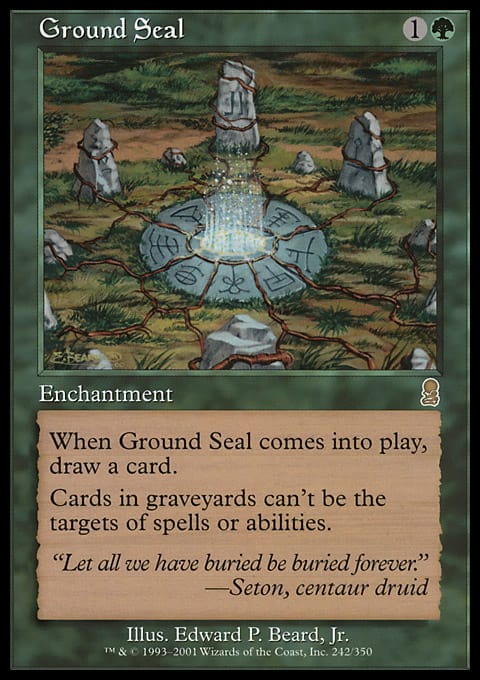
- 1 Ground Seal
- 1 Aura of Silence
Here’s a breakdown of the cards choices:
Setting Up
There are a few cards that you need to see in your opening hand in order to keep the hand. If you don’t see one of these cards, you need to mulligan, period. Unfortunately, this deck doesn’t work at all unless you have an Enchantress in play, so it’s really important that you have one of these cards in your opener:
|
 |
 |
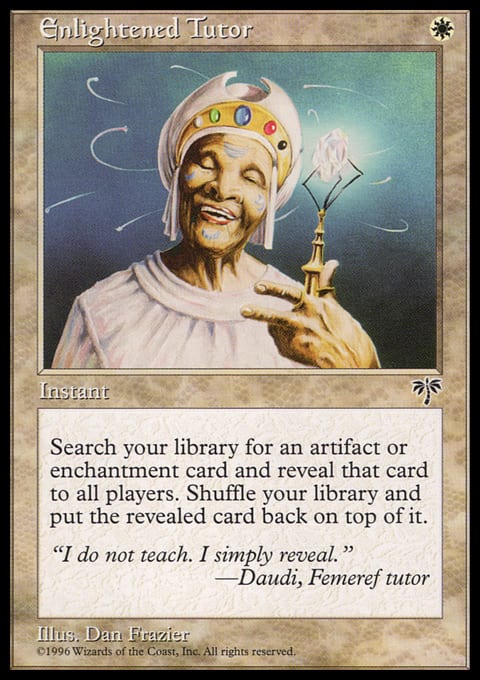 |
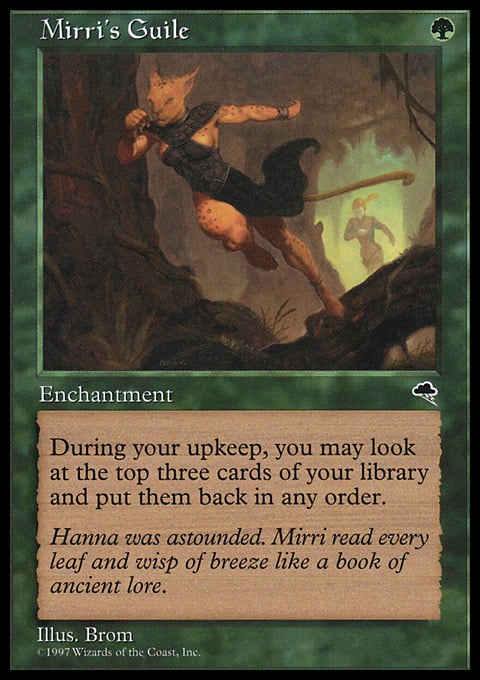
Obviously, you need an Enchantress in play early to set up, so you need to have either an Enchantress or an Enlightened Tutor in your opening hand. If you don’t, Mirri's Guile with fetch lands will help you dig for your Enchantress. Ideally, you want an Enchantress in play by turn two, and Wild Growth and Utopia Sprawl help with that.
The Lands
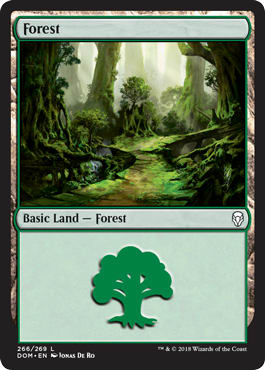
There are two Savannahs and one Tropical Island. With all of the mana-fixing in this deck, you never need any more than these dual lands in play, so there is no reason to play more of them and be prone to Wasteland.
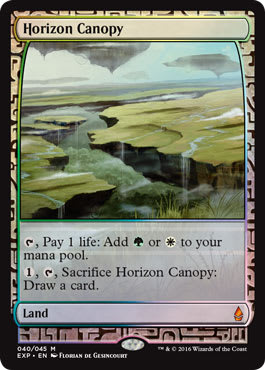
There are two utility lands, Karakas and Horizon Canopy. Karakas is amazing in Legacy right now. With all of the Griselbrands and Emrakuls running around, Karakas is a great card to have access to. It’s also nice to remove problem creatures for the deck, such as Thalia, Guardian of Thraben and Iona, Shield of Emeria.
Serra's Sanctum is the finisher land. I don’t like to play it early, mostly because Wasteland is in the format. When you do play it, however, it can provide anywhere from 5 to 15 mana! Serra's Sanctum can cast the Emrakul on its own, and it also helps make the Words of Wind work, which I’ll explain later.
There is one Crop Rotation in the deck to tutor up a Serra's Sanctum when you need it, but it can also find the Karakas or Horizon Canopy, depending on the situation. In addition, you can Crop Rotation your land away in response to a Wasteland activation. Crop Rotation also acts as a combo piece because once you tap your Serra's Sanctum for a lot of mana, you can Crop Rotation it away, search for the other Serra's Sanctum, and you then will have even more mana!
Playing the Deck

Words of Wind is another card that can virtually lock your opponent out of the game. If you have some number of Enchantresses in play, every time you cast an enchantment, you can pay 1 extra mana to return a permanent to your hand for each card-draw you choose to skip. You will usually return a Wild Growth on a land that you’ve already tapped, and you can replay the Wild Growth on a fresh land to make extra mana. I also like to tap my Serra's Sanctum for a ton of mana, cast an enchantment, return the Serra's Sanctum with Words of Wind, and replay it to generate more mana.
If you have two Enchantresses in play and return two permanents for each enchantment cast, after a couple of activations, your opponent will soon have zero permanent’s in play, thus being unable to win the game.
The One-Ofs

I am also playing Humility. Most people like to play Moat in this slot. I like Humility better because most of the creatures in this format attack in the air, such as Griselbrand and Delver of Secrets. Humility also shuts down activated abilities, such as the one on Griselbrand, and a lot of the creatures that Maverick plays such as Qasali Pridemage and Knight of the Reliquary. Shutting off the abilities of Thalia and Ethersworn Canonist are pretty good, too.
If decks such as Goblins and Merfolk are popular in your metagame, Moat may be a better call. With all of the creature control in the deck already, like the four Elephant Grass, you may not even need Moat anymore.
I play one Replenish because it’s great against counterspells and removal for your enchantments. It also gives you the option of not paying the upkeep on Solitary Confinement or Elephant Grass, letting them die, and then just Replenishing them back into play. Sacrificing Sterling Grove before you cast Replenish is pretty good, too.
Winning the Game
As you play the deck, not only will your opponent not be able to damage you and have no permanents in play, but you will be creating 4/4 Angels for every spell you cast, making for a very frustrating situation for your opponent.
The Sideboard

There are two Journey to Nowhere that are in there against problem creatures. Usually, this means Thalia and Ethersworn Canonist because it is very difficult to go off with one of these guys in play. Journey to Nowhere also slows down Delver and Maverick decks.
Cursed Totem is a very important card against a lot of decks. It shuts down all of Elves’s creatures, most of Maverick’s creatures, and Griselbrand. Maverick’s plan is to destroy your enchantments with Qasali Pridemage, and with Cursed Totem in play, the Maverick player will have a hard time doing that.
Choke and City of Solitude are for R/U/G Delver or any deck playing Islands. Both of these cards are must-counters for those decks and are very important in the matchup. If you can resolve a City of Solitude, that means you are free to resolve whatever you want.
There is a second Replenish against decks that plan to counter or destroy most of your enchantments. It’s good to have a second copy as a backup plan in case your deck runs out of fuel.
Finally, there is an Aura of Silence. This card has many uses. It’s great against combo decks that play things such as Chrome Mox and Lotus Petal, like Storm and Charbelcher. I also bring it in against decks that play Ethersworn Canonist as an additional way to kill it. It also kills Counterbalance and Animate Dead. Also, if you happen to play a mirror match, having this in play will make it nearly impossible for your opponent to win.
Wrapping Up
Enchantress is one of my favorite decks in Legacy. Maybe that’s because I’ve been playing it forever and it has a special place in my heart. It is fun and challenging to play, and it rewards you if you are good at thinking things out many turns ahead. It’s a good choice for a tournament because there are a lot of players who just don’t know how to play against it.
Enchantress is excellent against creature-based decks. Right now, most of the decks in Legacy win with creatures, making it an excellent metagame choice. It’s a bit weak to combo decks, so if you are expecting a lot of Storm, Elves, or Belcher in your meta, it’s not the best option. Enchantress also has a hard time against decks with Emrakul. Although you probably won’t take damage, you can’t stop the annihilator trigger.
I hope you’ve enjoyed my Enchantress primer and you’ll give it a try at your next tournament. You can be sure that I’ll be bringing this deck to Gen Con next month for the Legacy events there. As always, thanks for reading!
Melissa DeTora
@AllWeDoIsWinMTG on Twitter